
Fair Folk Carving’s Deven Sikand opens up about Wood Carved Iconography, Recent Pilgrimages, and Dungeon Synth
Tell us about your craftsmanship: what materials are you using? What pieces are you making?
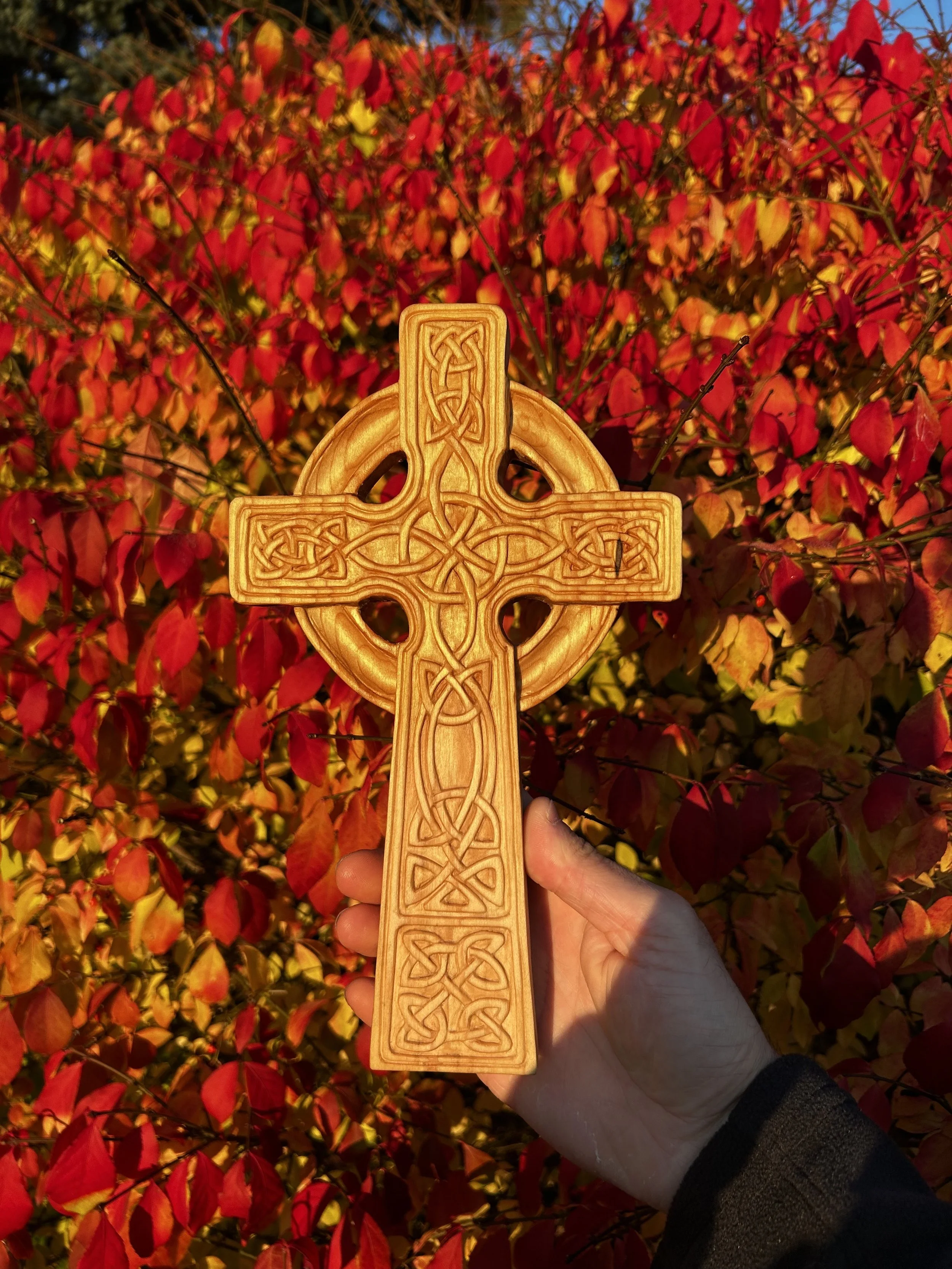
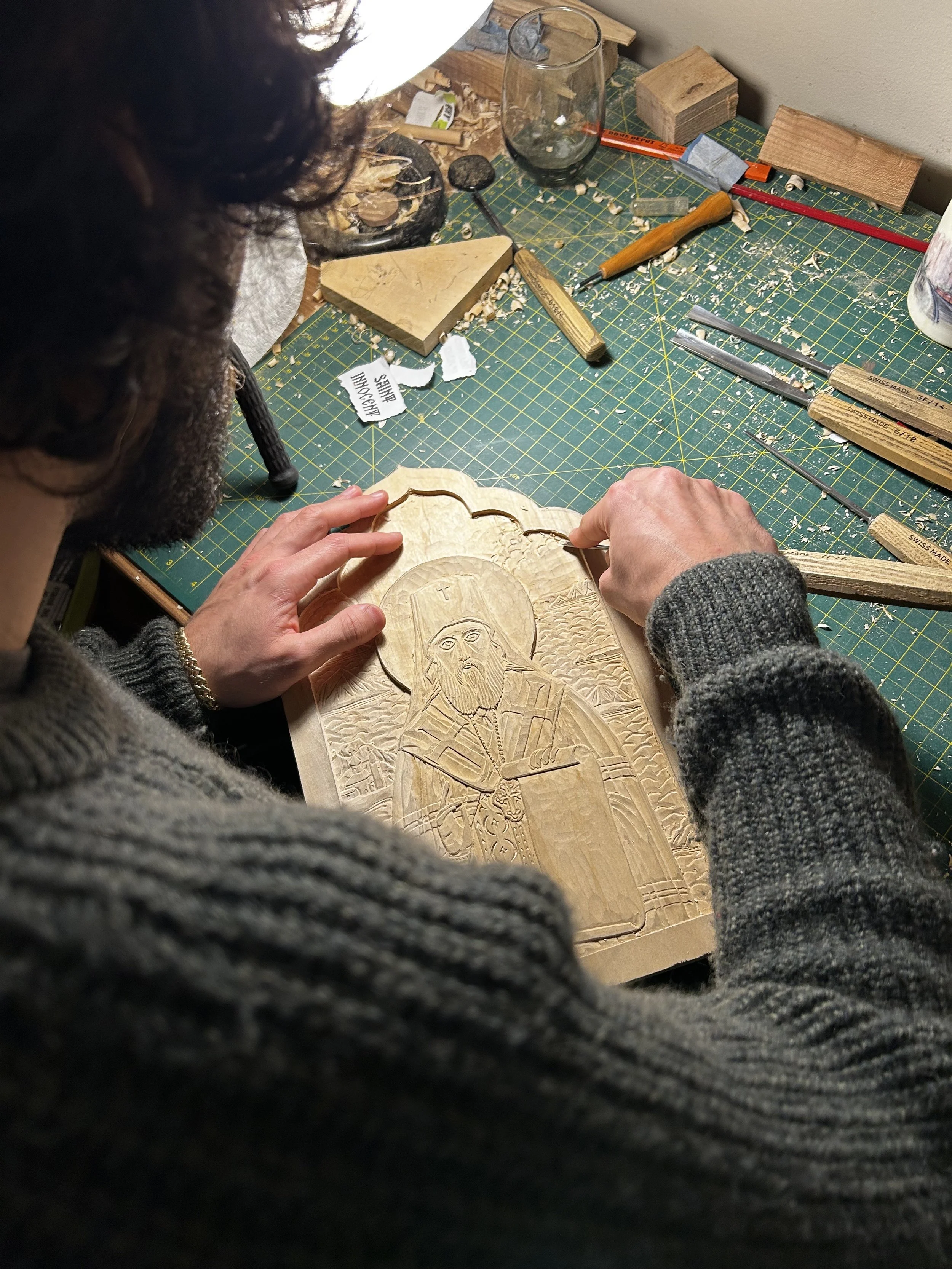
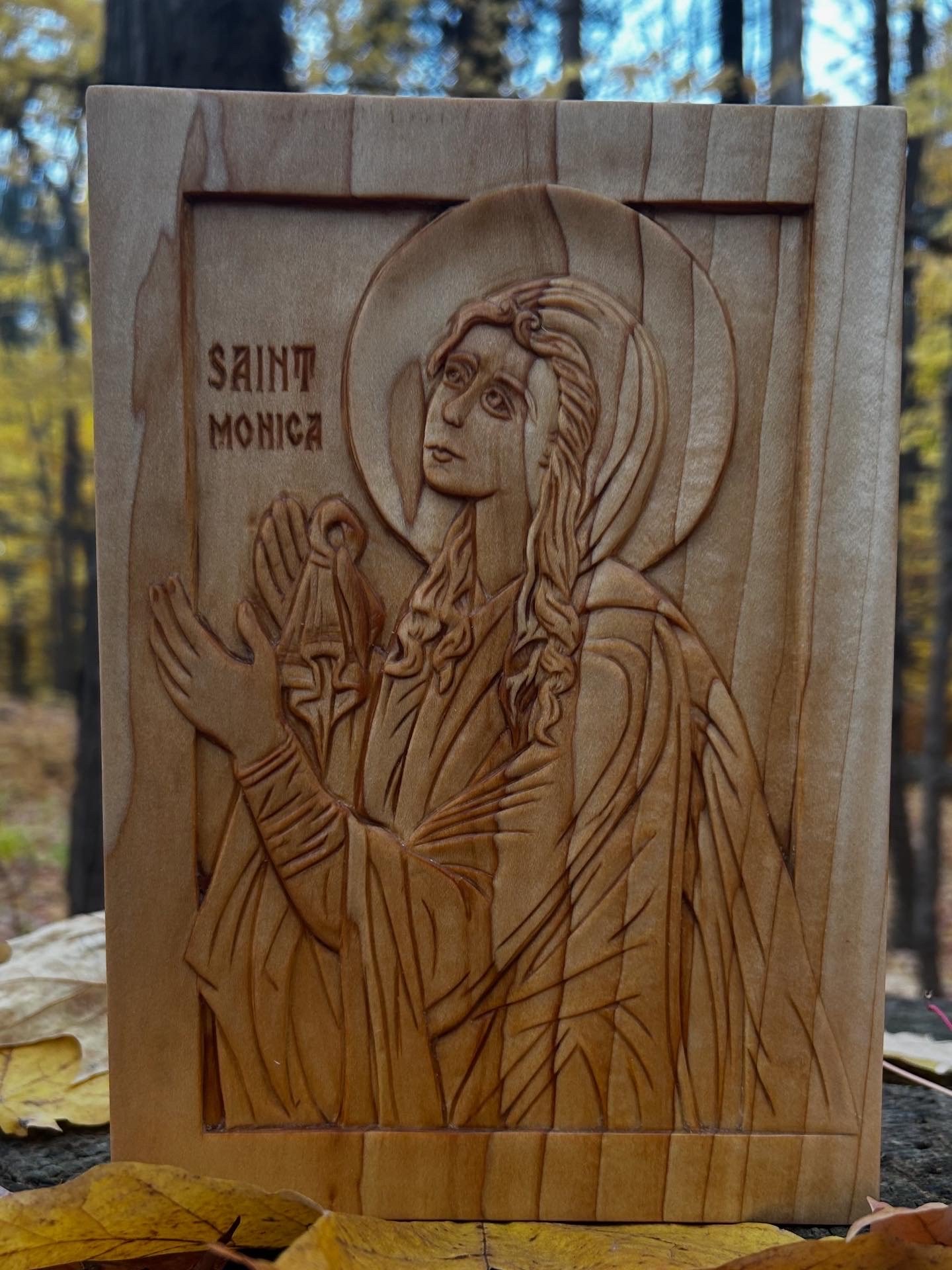
I carve wooden Icons, crucifixes and baptismal crosses by hand using traditional hand tools like chisels, gouges, knives and saws. These tools have been used for centuries in wood carving. This approach means my process is slow, but it also means more intentional carving. For me, my process is much quieter and more satisfying than using modern equipment and heavy machinery.
I use a variety of woods in my work, from wind-fallen branches I find locally to carve crosses, spoons and other small objects to locally milled boards for Icons. Most of my icons are carved out of Linden wood, which is very enjoyable to carve and also happens to be grown at many monasteries.
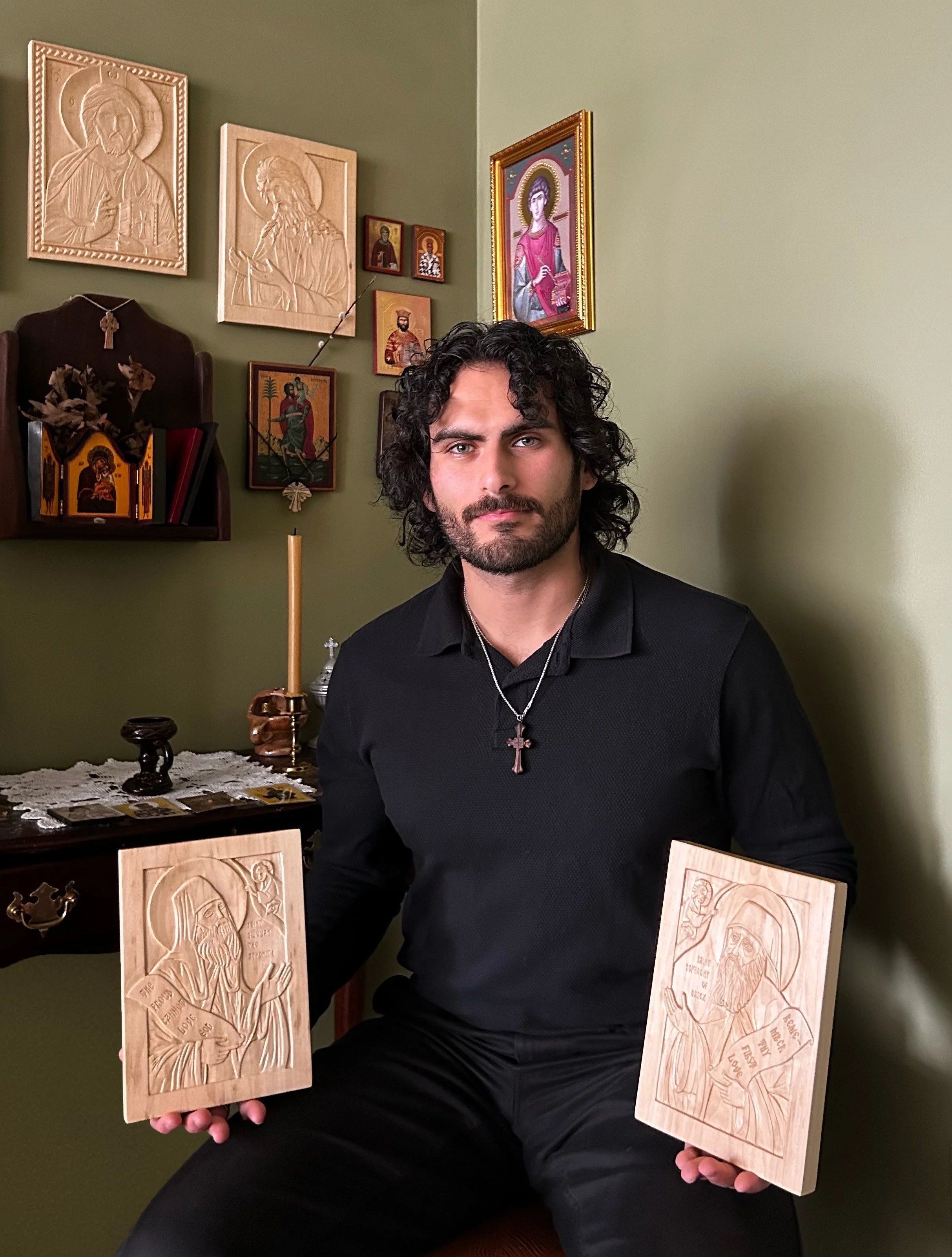
Most recently I’ve carved a set of Icons of Saint Silouan the Athonite and Saint Sophrony of Essex. I’m currently finishing up an Icon of Saint Innocent of Alaska. It has been such a blessing having the opportunity to carve Icons for people.
What was your process in becoming able to create these pieces? Were you ever an apprentice?
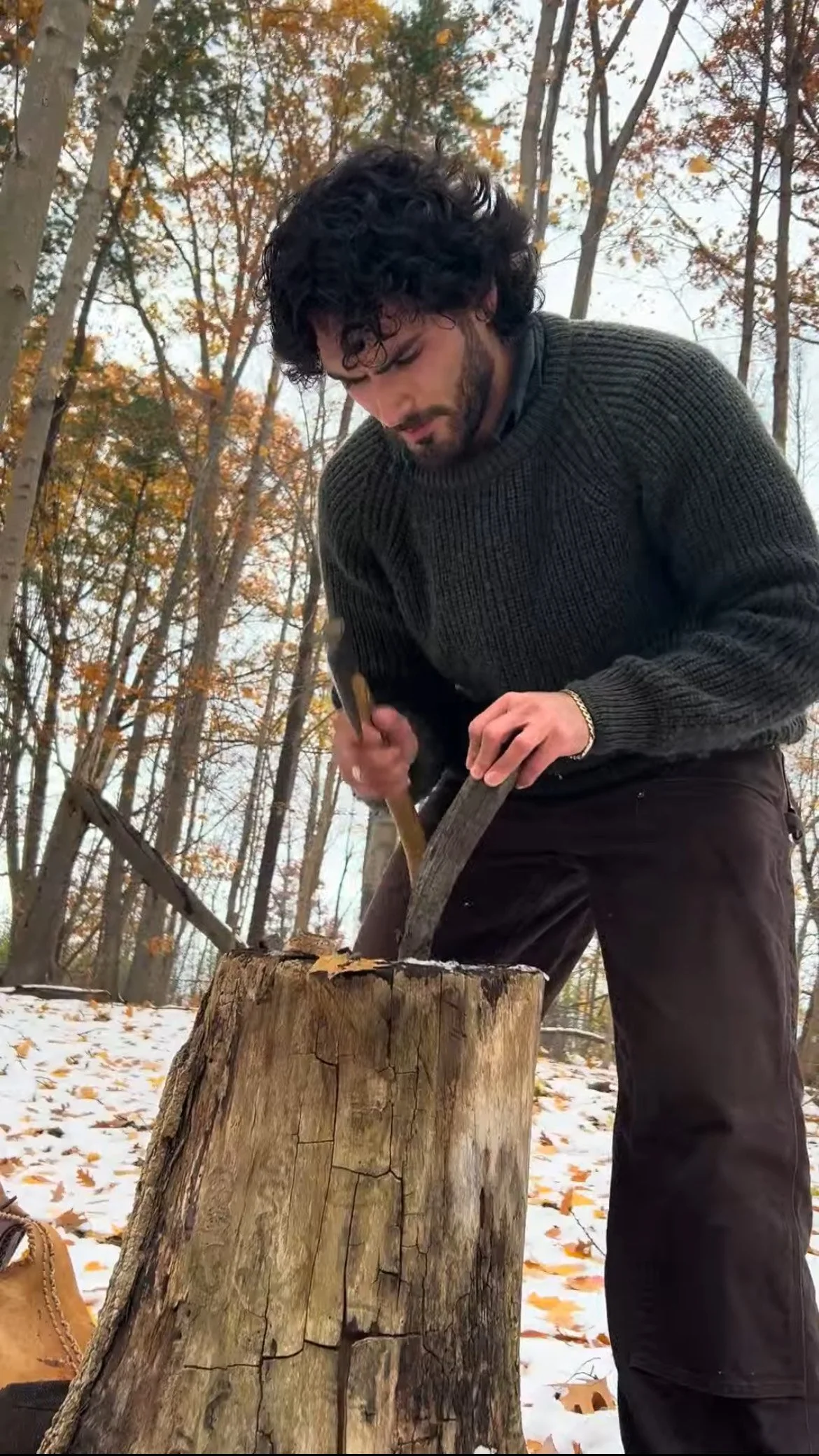
I started whittling during the first wave of the COVID-19 lockdowns. Like many, I suddenly had a lot of time on my hands and quickly became bored with my other hobbies. I came across a video of a man carving a little gnome figurine and it interested me so much that I figured I would give it a shot. My version might have been quite funny looking, but I was hooked. I spent some time carving these little figurines before I realized I wanted to create something more practical and useful in my everyday life. This led me to spoon carving and green woodworking in general, which means utilizing fresh, wet logs and branches. I’d spend hours out in the woods looking for naturally fallen branches and then use an axe and some knives to make spoons of all different sizes and shapes.
With my rapidly growing love for woodworking, I briefly worked as a carpenter’s apprentice, thinking I’d like it because I’d be working with wood, but after a few months I realized it wasn’t for me.
I first encountered a wood-carved icon when I first went to my now fiancé’s house and saw a carved icon of Saint George. I was immediately drawn to it. I knew I’d want to carve my own one day. That’s when I came across Jonathan Pageau, a famous French-Canadian icon carver. After years of contemplation and finally getting baptized, I mustered up the courage to take a course with him and carve my first icon. So, while I’ve never been a woodworking apprentice of any sort, this course set me up to have a great foundation in my own icon carving.
Have you ever gotten into any theory behind craftsmanship and its importance and revival?
I haven’t yet gotten too intellectual about traditional woodworking. At this point in my life, I wouldn’t want to take away from my time spent carving, but I do think about it a lot.
Something really special happens when you create something with your own hands. It’s deeply psychologically and spiritually nourishing. To paraphrase Tolkien, we were made in the image of a creator, so it’s in our nature to create things of our own in our limited capacity. It keeps us connected to the modern world, and allows us to contribute to the beauty of it.
Traditional societies more or less revolved around craftsmanship out of necessity. Part of what makes something like an old stone cottage or an old church so beautiful is the fact that they matched the landscape by using the materials local to them and because people were willing to dedicate their lives to building what would last for generations, even if they never got to see the finished product themselves.
These days, everything can be made easily and seemingly cheaply, but it has no soul. And we are removed from the beauty of handmade things. It doesn’t and shouldn’t take a trained eye to be able to tell if something is made by hand or machine (though AI will make this harder to do). When comparing the two, there is often a clear difference in how they make you feel.
I think traditional craft is more important now than ever before, and I’ve seen more and more people yearning to create something with their hands. I help organize a spoon carving event here in Ontario (shout out to SpoonMoot!) and we see so many new people eager to learn each year. It’s really beautiful to witness.
I’m also teaching private online classes to a small group of homeschooled children. We’re going over basic carving techniques and working on small projects together. It’s been incredibly fulfilling to watch them learn to work with their hands in this way.
In an age of mass production and the technological dystopia we seem to be headed towards, it almost feels like an act of rebellion to simply just unplug and create something.
Cradle or convert? What's your story?
I am a convert. My parents come from Sikh and Episcopalian backgrounds and I was brought up with my toes in both faiths on a surface level. I sort of grew up thinking all faiths were the same. As a chronically online teenager I became an angry atheist and later in university I was drawn to new age and far eastern practices. It was during this time that I met my fiancé, who is a cradle Orthodox Christian. Eventually I hit a wall in my spiritual life and my whole worldview sort of collapsed. Someone gifted me a copy of Mere Christianity by C.S. Lewis and there was too much in there I reluctantly agreed with. I started looking deeper into the various Christian traditions and realized that if Jesus was God, His church was the Orthodox Church. I was deeply moved by iconography, the mysteries of the church, the chanting, the incense, the asceticism, and the struggle. I was being challenged in ways I didn’t like but knew I needed. After attending services at my local parish for a few years and many long and challenging conversations with fellow parishioners and my now godfather, I became a catechumen. I was finally received into the Orthodox Church in early 2025.
Any recent pilgrimages?
I’ve been on quite a few pilgrimages recently. It has been an unusually adventurous year. I went to Serbia with my fiancé over the summer. We drove over 10 hours through narrow, winding mountain roads through Bosnia to get to the Ostrog Monastery in Montenegro. Venerating the relics of Saint Basil was a surreal experience. I also became sick while in Montenegro, so I visited a convent from the 12th century to receive a blessing and some herbal medicine prepared by the nuns. On the way back through Serbia, we visited Ravanica, the monastery built by Saint Lazar in the 14th century, where his relics are housed, and Manasija, built by his son, Saint Stefan Lazarević in the 15th century.
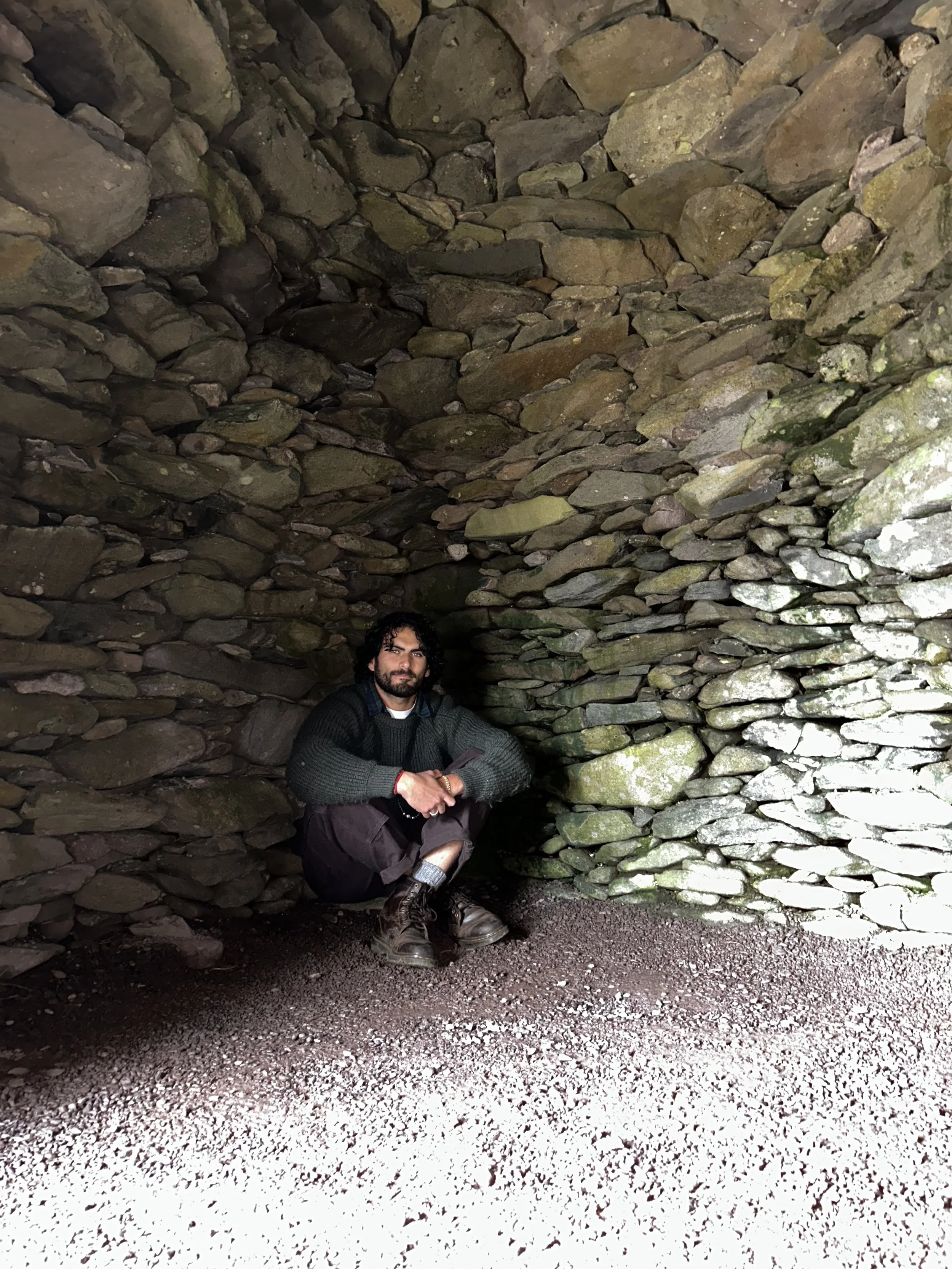
Then, later this fall, I went on a road trip through the south of Ireland with my dear friend and visited many early Christian sites: Saint Kevin’s hermitage and monastery in Glendalough; Saint Declan’s Monastery in Ardmore, where the first Irish Christians were baptized; Saint Brigid’s Holy Well; the site where Saint Brendan the Navigator set out on his famous voyage; along with many other monastery ruins, monastic beehive huts, and even got within sight of Skellig Michael, Ireland’s holy monastic island. It was incredible to explore this side of my Christian heritage, and I have a deep love for the Irish saints (I’m eagerly waiting for someone to commission an icon of any of them!).
Finally, I’ve had the pleasure of staying at Holy Trinity Greek Orthodox Monastery in Smith’s Creek, Michigan, twice this year. It is a bit closer to home for me and less of a physical pilgrimage, but it a special place and very dear to my heart.
Opinion on dungeon synth?
I am a big, big fan of dungeon synth! I have it on a good amount of the time. It helps me romanticize life. DIM and Hole Dweller are probably my favorites, but of course I have a bias towards Fathomage, a fellow Orthodox Christian.